Tiedown Anchors / Ground Anchors
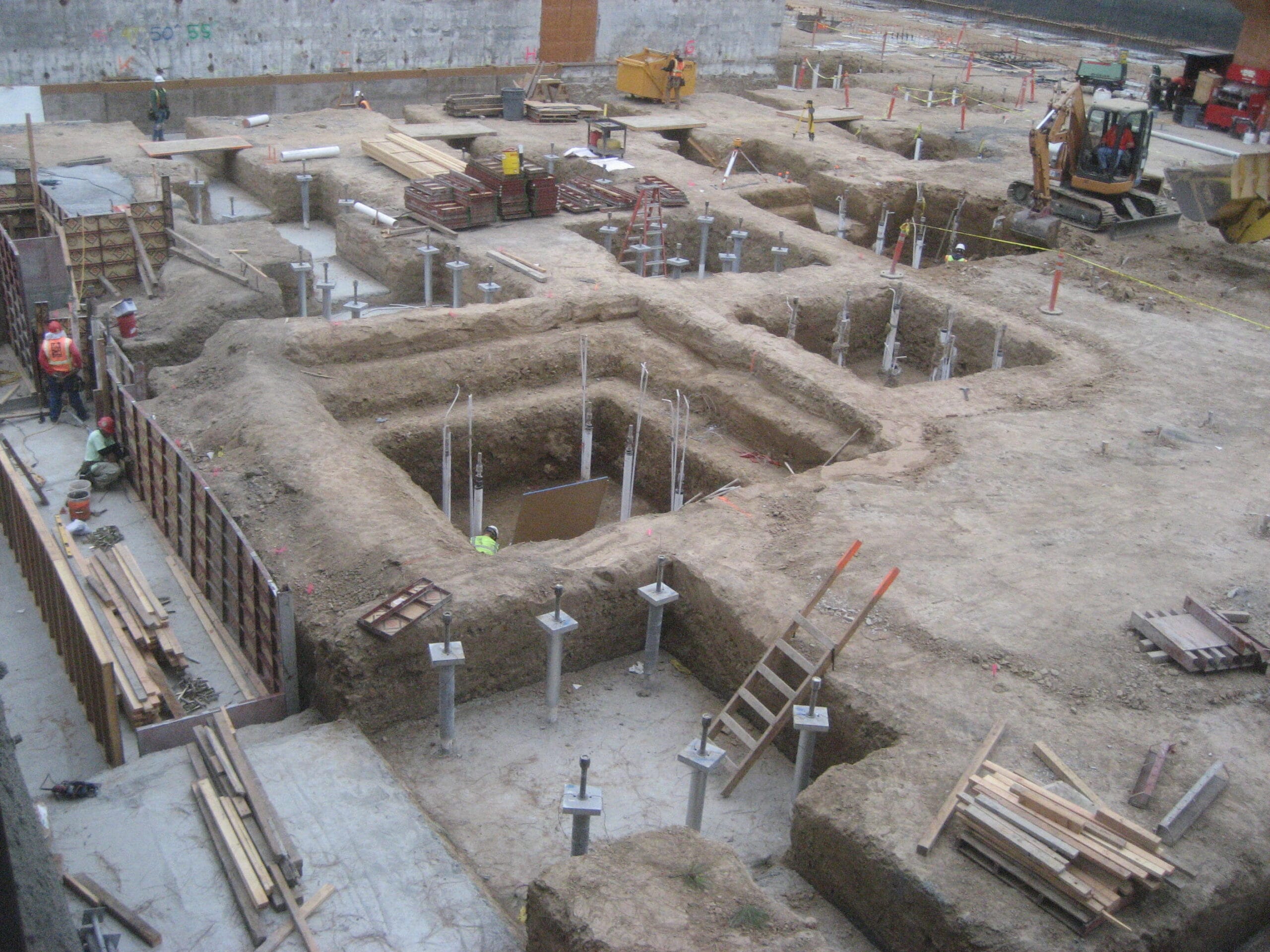
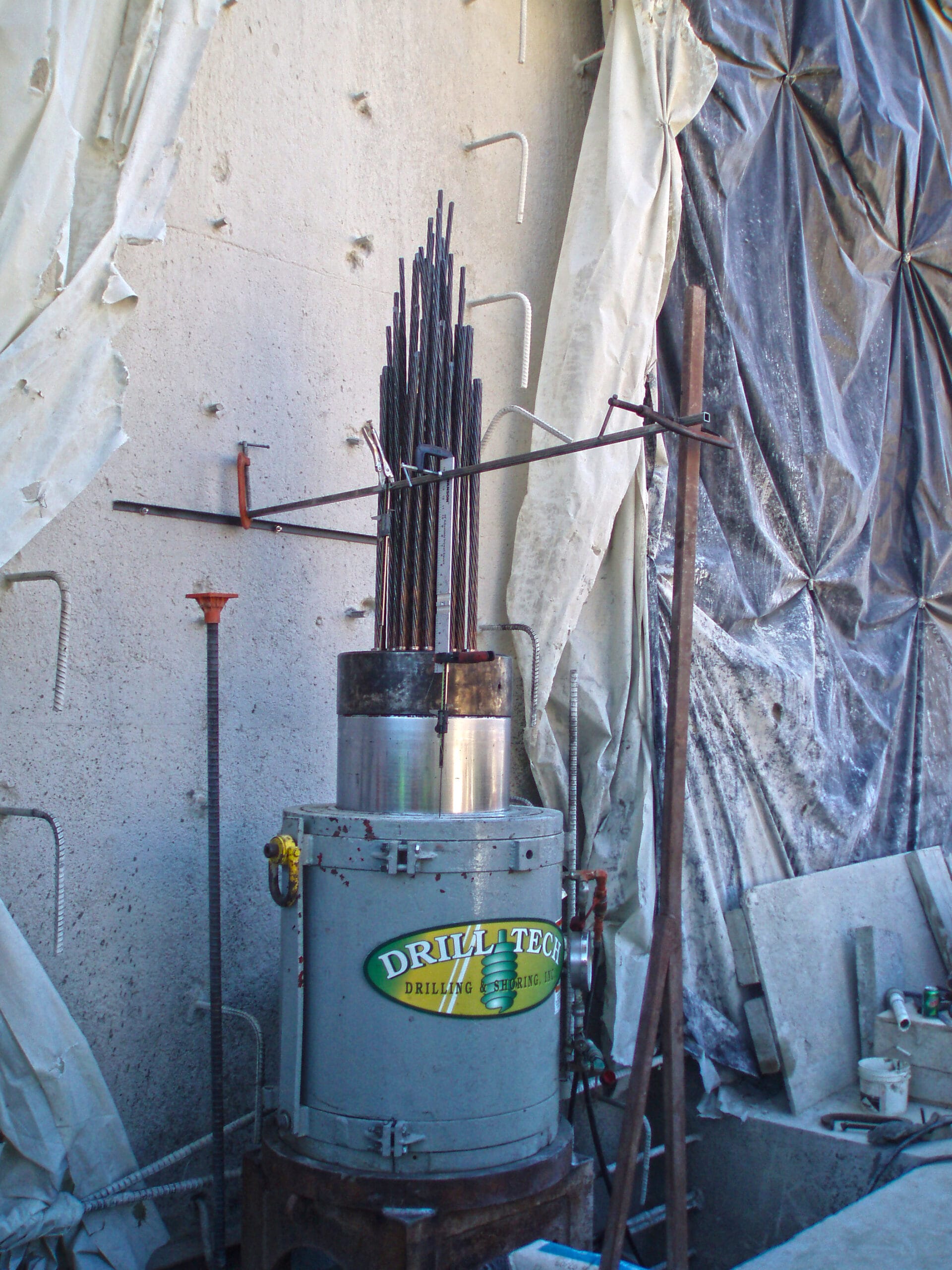
Tiedown anchors, also known as vertical ground anchors, are pre-stressed structural elements installed at a vertical or near-vertical orientation. These anchors are designed to transfer tensile loads into the ground and are commonly used on retaining walls, dams, or slabs that need additional resistance against earthquakes, overturning, or hydrostatic forces. Tiedown anchors consist of a high-strength steel tendon (bar or strand) grouted into a drilled hole and tensioned against a structural anchorage.
Construction Process
Tiedown anchors are constructed with an “unbonded” and “bonded” length. The “unbonded” length is the portion of the steel bar or strand which is allowed to elongate freely; this portion of the tiedown anchor prevents load transfers to areas too close to existing utilities or on failure planes. The “bonded” length is the part of the steel that is bonded to the grout of the tiedown anchor. This length transmits the applied load into the ground using the friction between the grout column and ground. For permanent projects, the anchors are corrosion protected with epoxy coating or corrugated plastic sheathing. In temporary shoring applications, bare steel strands or bars are used instead.
Benefits of Use
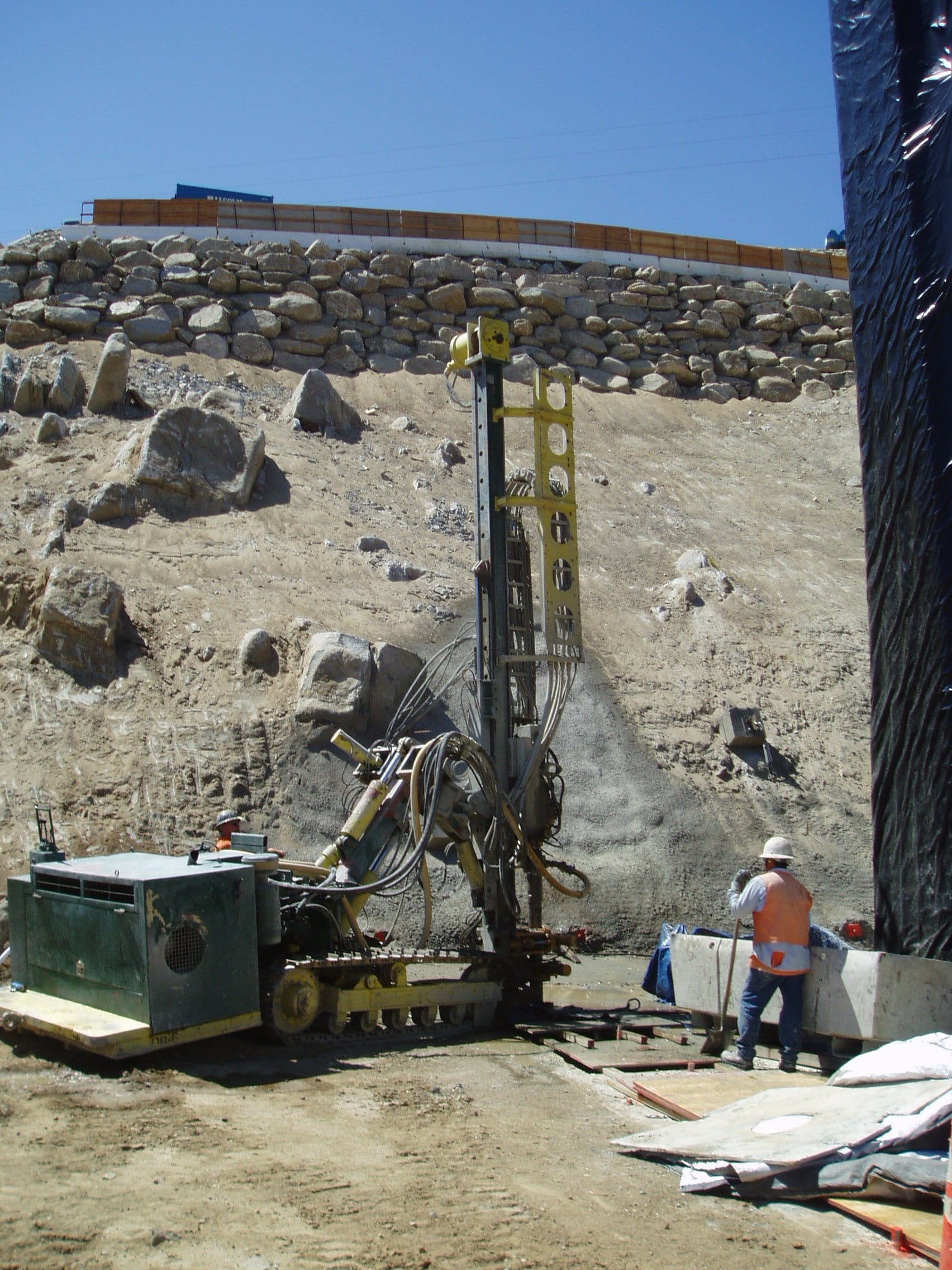
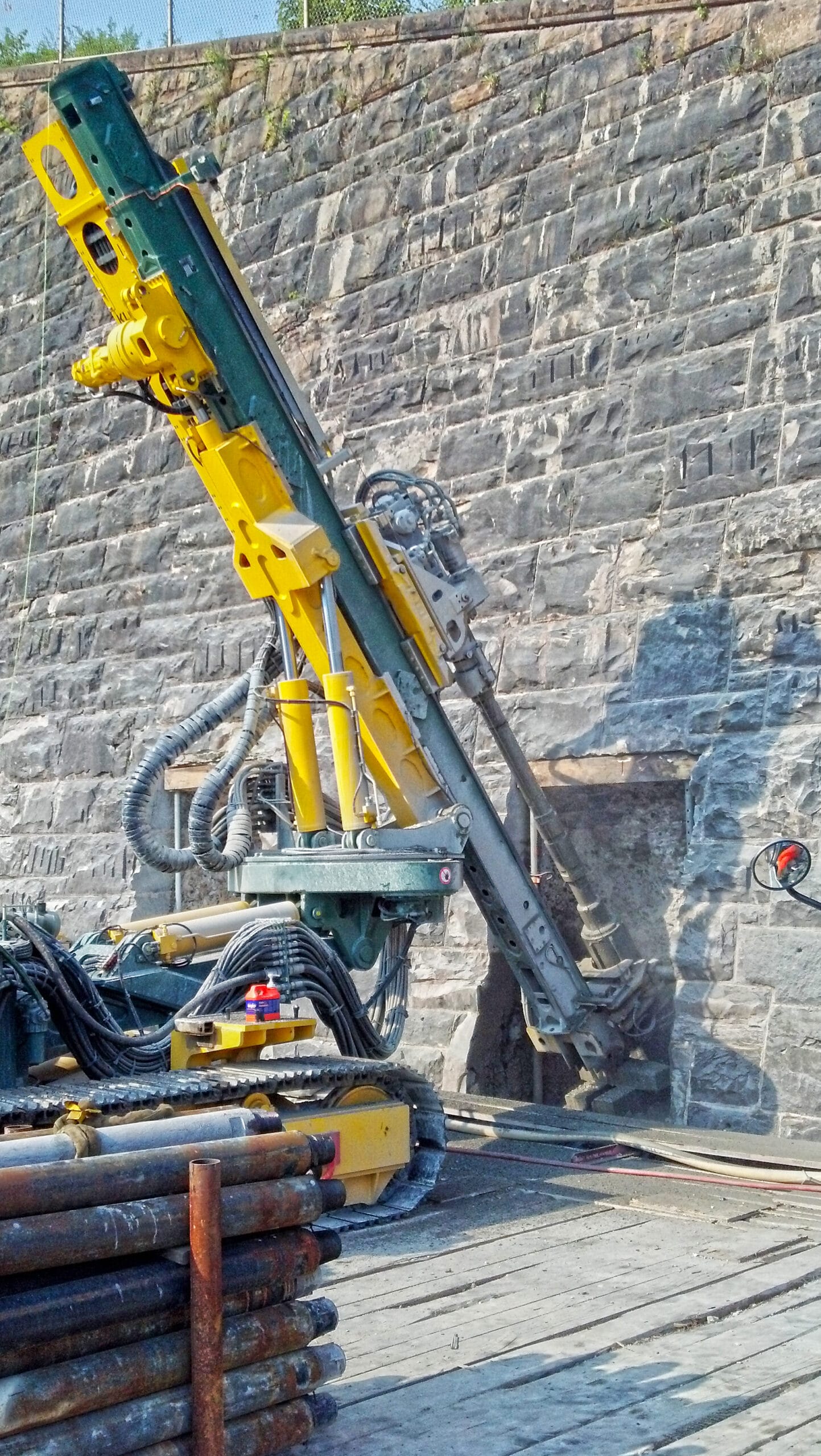
Drill Tech’s fleet of equipment contains both purchased and self-designed drill rigs. Because of our extensive experience with tiedown anchors our fleet allows us to install tiedown anchors in almost any type of ground.
Applicable Projects
New Bridge & Building Foundations
Seismic Retrofits of Existing Structures
Existing Dam & Spillway Stabilization
Uplift Resistance for Foundation Slabs
Construction Process
Tiedown anchors are constructed with an “unbonded” and “bonded” length. The “unbonded” length is the portion of the steel bar or strand which is allowed to elongate freely; this portion of the tiedown anchor prevents load transfers to areas too close to existing utilities or on failure planes. The “bonded” length is the part of the steel that is bonded to the grout of the tiedown anchor. This length transmits the applied load into the ground using the friction between the grout column and ground. For permanent projects, the anchors are corrosion protected with epoxy coating or corrugated plastic sheathing. In temporary shoring applications, bare steel strands or bars are used instead.
Benefits of Use
Drill Tech’s fleet of equipment contains both purchased and self-designed drill rigs. Because of our extensive experience with tiedown anchors our fleet allows us to install tiedown anchors in almost any type of ground.
Applicable Projects
New Bridge & Building Foundations
Seismic Retrofits of Existing Structures
Existing Dam & Spillway Stabilization
Uplift Resistance for Foundation Slabs
Construction Process
Tiedown anchors are constructed with an “unbonded” and “bonded” length. The “unbonded” length is the portion of the steel bar or strand which is allowed to elongate freely; this portion of the tiedown anchor prevents load transfers to areas too close to existing utilities or on failure planes. The “bonded” length is the part of the steel that is bonded to the grout of the tiedown anchor. This length transmits the applied load into the ground using the friction between the grout column and ground. For permanent projects, the anchors are corrosion protected with epoxy coating or corrugated plastic sheathing. In temporary shoring applications, bare steel strands or bars are used instead.
Benefits of Use
Drill Tech’s fleet of equipment contains both purchased and self-designed drill rigs. Because of our extensive experience with tieback anchors, we’ve built our own reach-over drill rigs, hanging drill masts, limited access drill rigs, and high-reach drill rigs. We’ve also designed and constructed drill masts for excavators, forklifts, and drill baskets—these last masts supported by a crane. Our fleet allows us to install tiedown anchors in almost any type of ground.
Applicable Projects
New Bridge & Building Foundations
Seismic Retrofits of Existing Structures
Existing Dam & Spillway Stabilization
Uplift Resistance for Foundation Slabs