Drilled Displacement Piles
Drilled displacement piles, slender foundation support members, transmit loads to the ground through skin friction between the pile surface and surrounding soil. These piles are traditionally used as a foundation element but are also a wise choice when a vertical element is required in ground with the potential to cave. Drill Tech installs drilled displacement piles with low-strength, lean-mix backfill concrete. This method minimizes chipping common to high-strength concrete and is especially beneficial for projects that plan to install lagging or remove support beams.
Construction Process
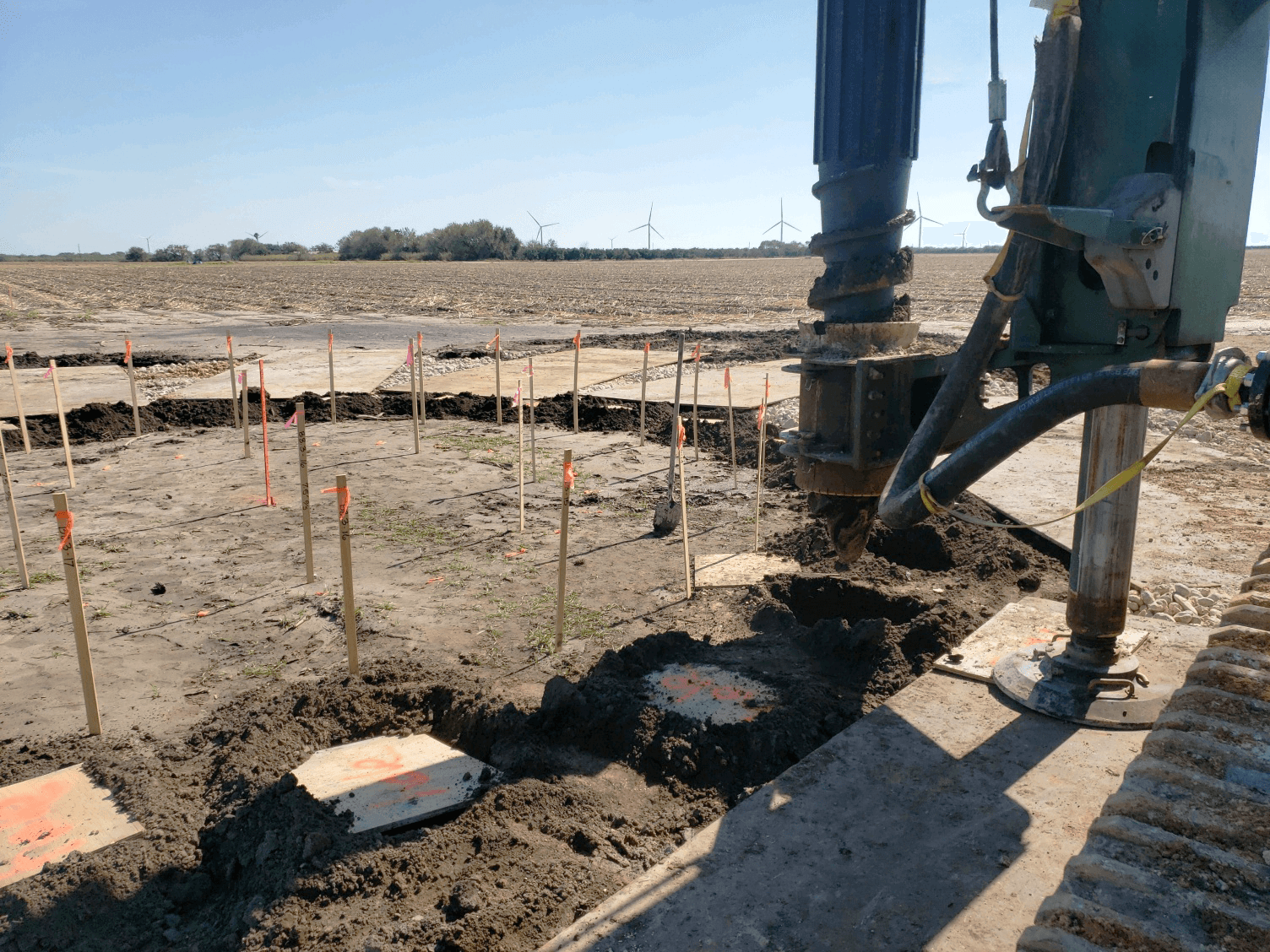
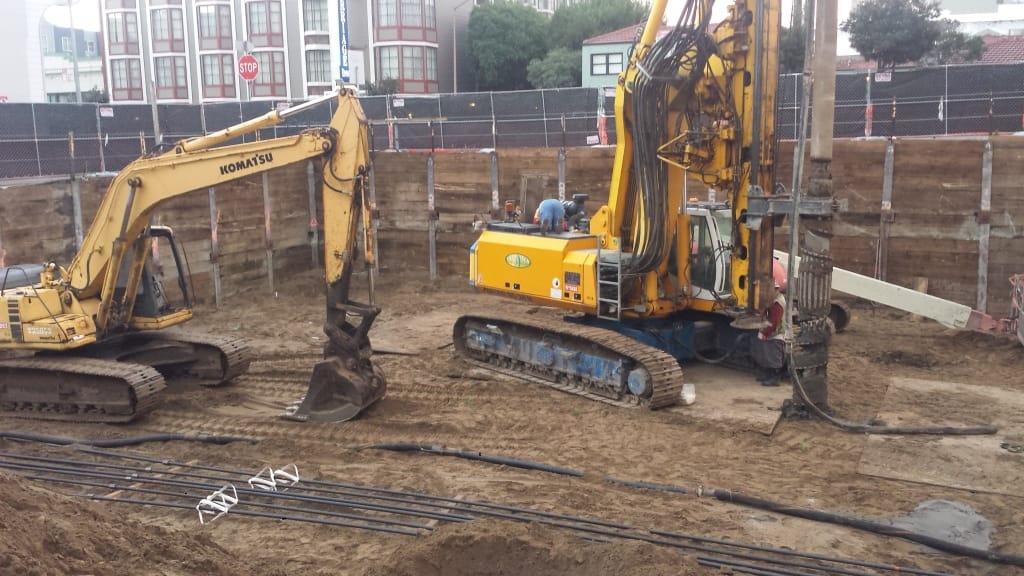
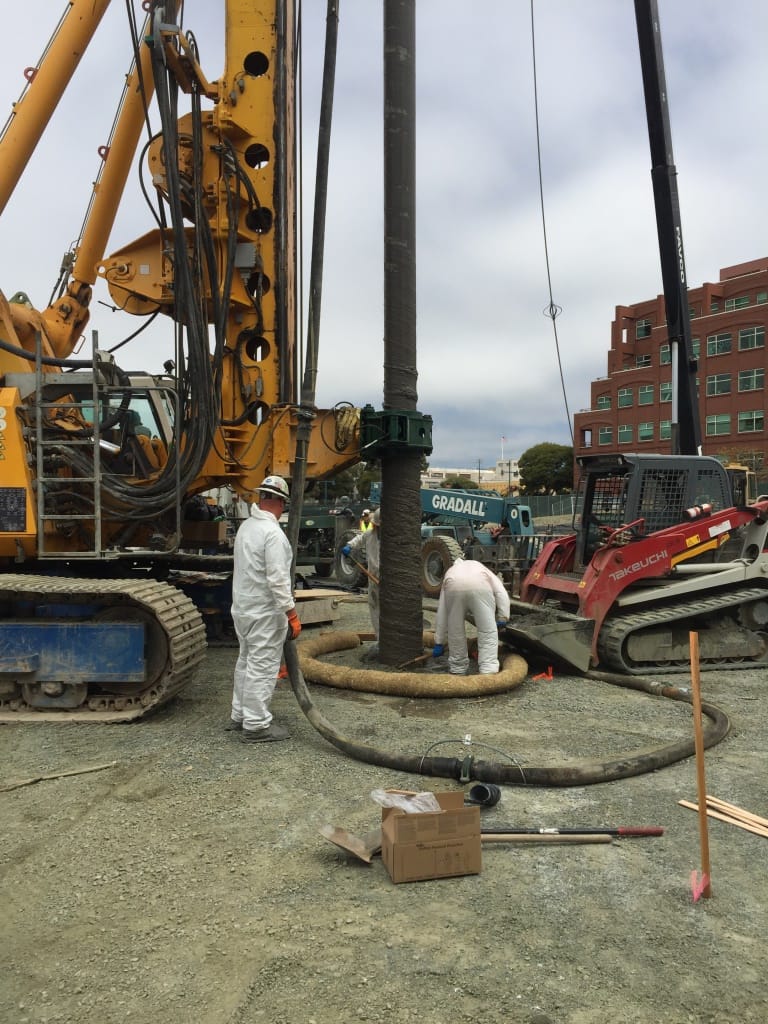
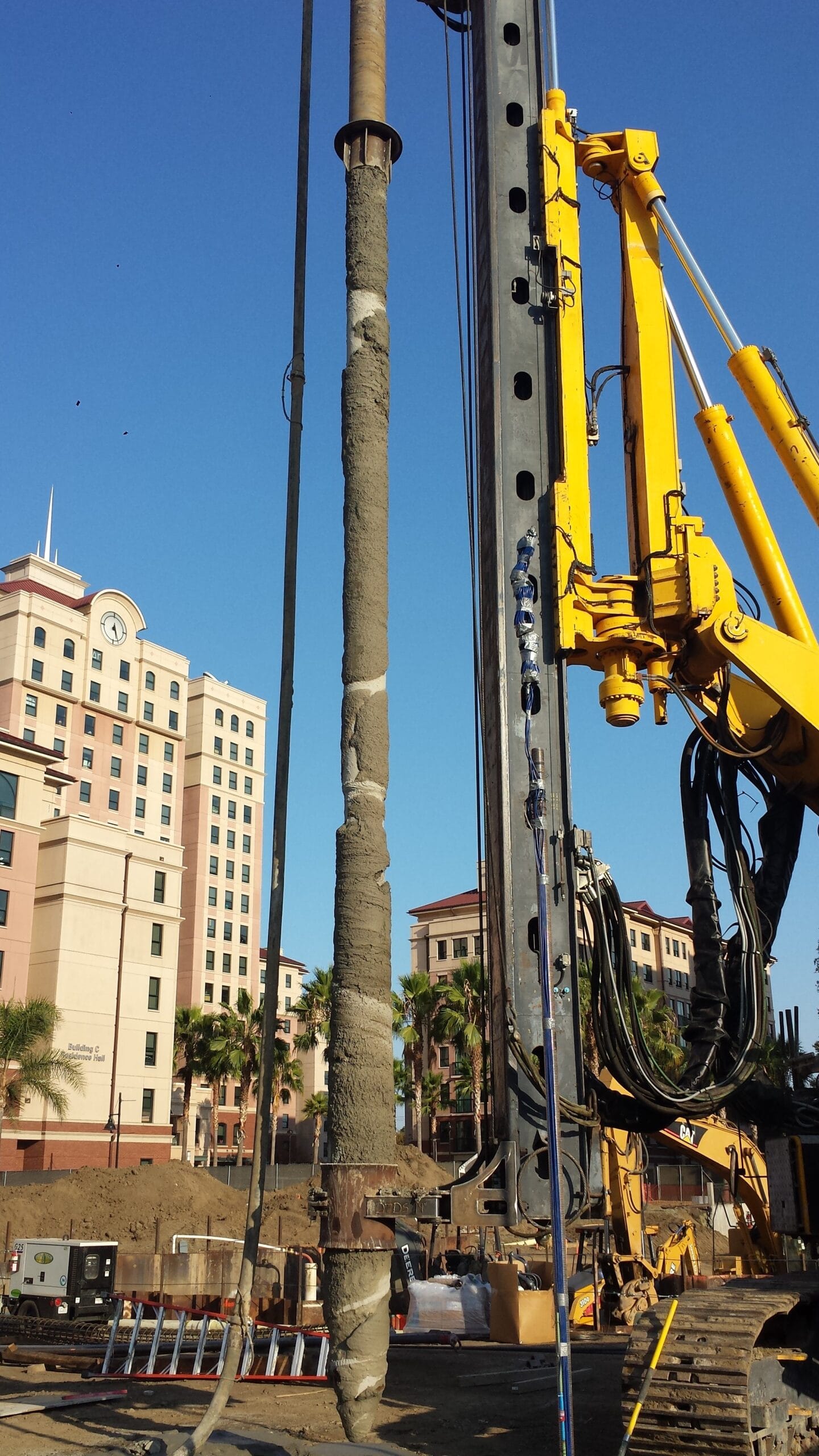
Drilled displacement piles are drilled into the ground with two flights of standard auger and two reverse flights. This drilling method pushes loose material that would otherwise become spoils back into the ground. The piles range from 16 to 36 inches in diameter and are pumped with high-strength cement grout under pressure as the drill is withdrawn. If required, our team installs steel reinforcement while the cement is still fluid; depending on the project, piles are reinforced with either a rebar cage or a high-strength bar.
Benefits of Use
Drilled displacement piles are especially effective in projects where the ground may cave under traditional CIDH drilling conditions. Our team also recommends them for work sites with noise or environmental sensitivities, as drilled displacement piles cause minimal disturbance compared to driven piles. These piles also create very little spoil and provide an additional ground improvement measure by consolidating soil between piles. Drill Tech engineers have decades of experience designing concrete mixes appropriate for applicable projects and are familiar with the sequence planning required for an efficient on-site build.
Applicable Projects
Temporary Soldier Pile Shoring
Volume-Sensitive Sites
Environmentally Sensitive Sites
Construction Process
Drilled displacement piles are drilled into the ground with two flights of standard auger and two reverse flights. This drilling method pushes loose material that would otherwise become spoils back into the ground. The piles range from 16 to 36 inches in diameter and are pumped with high-strength cement grout under pressure as the drill is withdrawn. If required, our team installs steel reinforcement while the cement is still fluid; depending on the project, piles are reinforced with either a rebar cage or a high-strength bar.
Benefits of Use
Drilled displacement piles are especially effective in projects where the ground may cave under traditional CIDH drilling conditions. Our team also recommends them for work sites with noise or environmental sensitivities, as drilled displacement piles cause minimal disturbance compared to driven piles. These piles also create very little spoil and provide an additional ground improvement measure by consolidating soil between piles. Drill Tech engineers have decades of experience designing concrete mixes appropriate for applicable projects and are familiar with the sequence planning required for an efficient on-site build.
Applicable Projects
Temporary Soldier Pile Shoring
Volume-Sensitive Sites
Environmentally Sensitive Sites
Construction Process
Drilled displacement piles are drilled into the ground with two flights of standard auger and two reverse flights. This drilling method pushes loose material that would otherwise become spoils back into the ground. The piles range from 16 to 36 inches in diameter and are pumped with high-strength cement grout under pressure as the drill is withdrawn. If required, our team installs steel reinforcement while the cement is still fluid; depending on the project, piles are reinforced with either a rebar cage or a high-strength bar.
Benefits of Use
Drilled displacement piles are especially effective in projects where the ground may cave under traditional CIDH drilling conditions. Our team also recommends them for work sites with noise or environmental sensitivities, as drilled displacement piles cause minimal disturbance compared to driven piles. These piles also create very little spoil and provide an additional ground improvement measure by consolidating soil between piles. Drill Tech engineers have decades of experience designing concrete mixes appropriate for applicable projects and are familiar with the sequence planning required for an efficient on-site build.
Applicable Projects
Temporary Soldier Pile Shoring
Volume-Sensitive Sites
Environmentally Sensitive Sites